Orthobiologic & Image-Guided Care
PRP & Orthobiologics
Platelet-rich plasma (PRP) is a blood-based orthobiologic procedure. It may be considered for selected joint, tendon and soft-tissue conditions following specialist assessment, alongside established ultrasound-guided procedures and rehabilitation.
Procedures are considered within an individualised management strategy focused on recovery, function, movement and long-term musculoskeletal health.
- Specialist-led
- Sports & exercise physician
- Ultrasound-guided
- Real-time imaging
- Evidence-informed
- Considered, measured care
Philosophy
A thoughtful & evidence-informed approach.
Dr Bikram Karmakar integrates interventional procedures within broader rehabilitation, exercise and movement-focused care.
Procedures are never considered as standalone solutions — they sit alongside diagnosis, education and a tailored management strategy designed around the individual.
“Interventional procedures are considered as part of a broader rehabilitation and long-term management approach.”
Accurate diagnosis
Core principle
Patient education
Core principle
Rehabilitation
Core principle
Exercise integration
Core principle
Long-term function
Core principle
Evidence-informed decisions
Core principle
Conditions we assess
Joint and tendon care, tailored to the diagnosis.
Specialist care extends beyond knee osteoarthritis. Assessment may include osteoarthritis and persistent pain in other joints, tendinopathy and selected soft-tissue conditions. Treatment choices depend on the diagnosis, the evidence for that particular condition, previous treatment and your goals.
PRP or an image-guided procedure is considered only where appropriate. Evidence and suitability differ between joints and tendons, and rehabilitation remains central. Inflammatory arthritis may require rheumatology assessment.
Procedures overview
Specialist-led interventional procedures.
Each procedure is considered carefully against the clinical picture — with realistic expectations and a clear rationale.
Platelet-Rich Plasma (PRP)
A blood-based orthobiologic procedure considered for selected tendon, joint and soft-tissue conditions where evidence supports use.
Ultrasound-Guided Injections
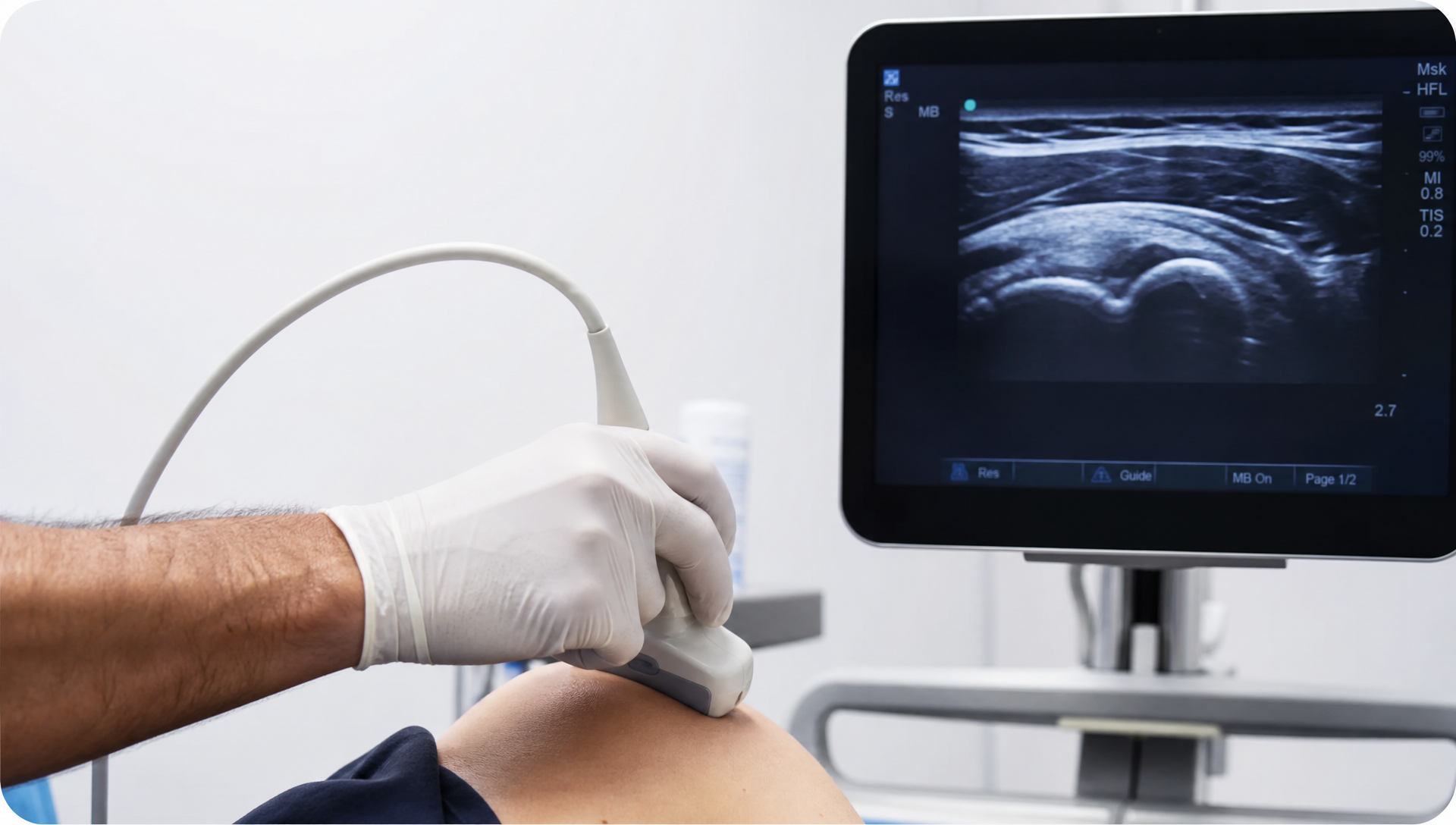
Real-time imaging for accurate, targeted delivery to the intended musculoskeletal structure.
Tendon Procedures
Specialist procedures for selected tendinopathies, integrated with progressive loading rehabilitation.
Joint Procedures
Image-guided joint procedures for selected arthritic and inflammatory conditions within a broader plan. Many people with knee osteoarthritis are managed without any procedure.
Knee osteoarthritis careCompartment Pressure Testing
Specialist diagnostic testing for suspected exertional compartment syndromes in active individuals.
Specialist Assessment First
Every option starts with diagnosis, imaging review and a discussion of non-procedural alternatives, rehabilitation and expected outcomes.
Education
Understanding Platelet-Rich Plasma (PRP).
Platelet-rich plasma (PRP) involves preparing a concentrated platelet solution from a patient's own blood for use in selected musculoskeletal conditions.
Potential applications may include selected tendon, joint and soft tissue conditions where clinically appropriate. Different PRP formulations may be considered depending on the tissue, clinical goals and rehabilitation strategy.
Professional reference
Dr Karmakar is listed in the practitioner directory on PRPinjection.com.au and uses the resource alongside current peer-reviewed literature when reviewing PRP evidence.
Considerations
Tissue being treated
Different tissues respond differently — formulations are matched to clinical context.
Clinical goals
Functional outcomes and rehabilitation objectives shape the approach.
Broader rehabilitation strategy
PRP is considered as one component of an integrated management plan.
Balanced perspective
Evolving evidence
The literature continues to develop across indications and protocols.
Patient selection
Careful assessment determines whether PRP is appropriate.
Rehabilitation importance
Outcomes depend heavily on structured rehabilitation.
Variability in outcomes
Responses vary between individuals and conditions.
Evidence & rehabilitation
Procedures within broader rehabilitation.
Movement, rehabilitation and exercise remain central to musculoskeletal recovery and long-term health.
Procedures may be considered where clinically appropriate, but are integrated within a broader management plan that supports sustainable recovery and function.
- Rehabilitation
- Strength & conditioning
- Exercise prescription
- Load management
- Movement retraining
- Lifestyle medicine principles
Next steps
Advanced options after standard treatment has not been enough.
When persistent symptoms limit movement, a fresh specialist perspective can be worthwhile.
Specialist assessment can revisit the diagnosis, imaging, contributing factors and previous treatment response. Appropriate non-operative, interventional and surgical options are considered individually, with balanced discussion of the evidence, limitations, risks and alternatives.
Frequently asked
Considered answers to common questions.
Educational responses — not promotional. Individual recommendations are always made within specialist consultation.
Education & evidence
An ongoing engagement with the evidence.
Dr Karmakar maintains an active interest in current research and evolving evidence relating to musculoskeletal interventions, rehabilitation and image-guided procedures.
Future educational resources, articles and evidence summaries may be integrated into this section as the literature develops.
Philosophy
“Movement, rehabilitation and long-term function remain central to musculoskeletal care.”